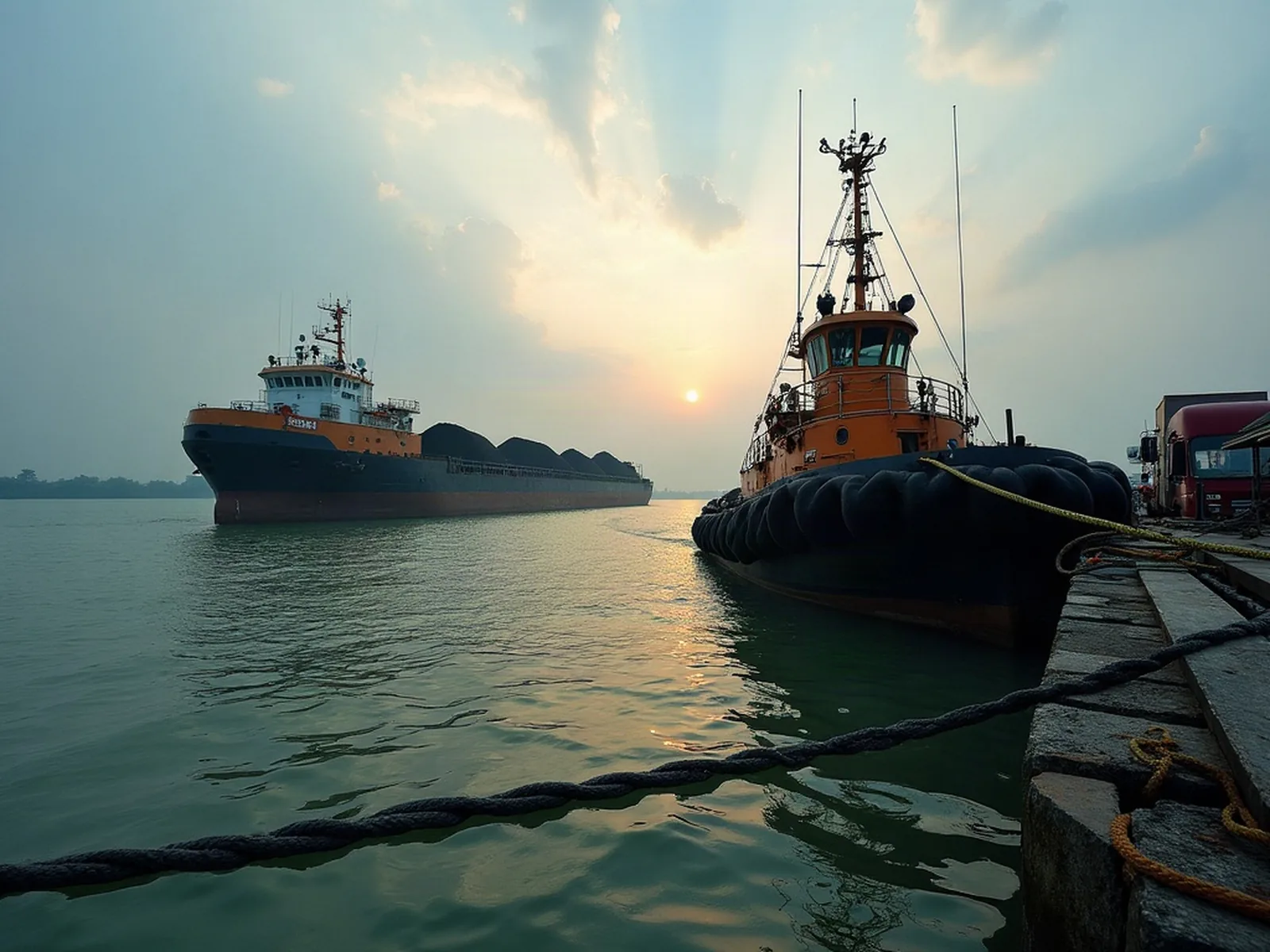
Commercial vessel surveys cover cargo ships, tankers, bulk carriers, tugs, barges, LCTs, offshore support vessels and passenger craft. Scope is set by why the survey is happening — purchase, charter entry, insurance, financing, towage approval or pre-docking — and the report is written for the party carrying that risk.
On the commercial side the question is rarely “is she nice?” It is whether she will complete the contract, hold her certificates, satisfy the charterer’s vetting and survive the next five years of trading without an unplanned docking. Those are answerable questions and the answers are measurable.
By vessel type
| Vessel type | Focus of the survey | Frequent findings |
|---|---|---|
| General cargo / bulk carrier | Hold and hatch condition, hatch cover weathertightness, tank top and bilge wells, cargo gear, thickness in way of holds | Hatch cover compression bar and gasket wear, corroded tank tops, cargo gear certification gaps |
| Tanker (product / chemical / bunker barge) | Cargo tank coating, pipeline and valve integrity, inert gas or venting arrangements, pump-room safety, prior cargo history | Coating breakdown in tanks, leaking manifold valves, gas detection out of calibration |
| Tug | Towing winch and gear, main engine and gearbox condition, bollard pull evidence, hull plating at fendering and pushing areas | Wire and shackle condition, undocumented bollard pull, wastage behind fenders |
| Barge / deck cargo barge | Deck plating and stiffening, watertight hatches and manholes, void space condition, securing points, freeboard marks | Corroded manhole covers, un-sounded voids full of water, missing or unrated securing points |
| LCT / landing craft | Ramp structure and hydraulics, bow door sealing, deck loading limits, beaching damage history | Ramp hinge wastage, non-functional ramp seals, undocumented deck loads |
| OSV / AHTS / crew boat | Deck arrangement and loading, DP and manoeuvring systems where fitted, cargo tanks, accommodation standard, client vetting requirements | Deck strength documentation gaps, worn towing and anchor-handling gear, vetting non-conformities |
| Passenger / ferry | LSA against certified capacity, evacuation arrangements, fire zones and detection, watertight subdivision | LSA short of certified numbers, blocked escapes, fire-door failures |
Charter-related surveys
Under time charter the practical surveys are on-hire and off-hire condition and bunker surveys, carried out at delivery and redelivery so responsibility for change during the charter is not a matter of memory. Under voyage charter the surveys are cargo-related: hold cleanliness before loading, condition at loading and outturn at discharge. Both are covered on the draft, bunker and cargo survey page.
Barge suitability and towage approval
Before a loaded barge moves — project cargo, transformers, modules, cranes, rigs — an underwriter usually requires an approval survey. This is not a condition survey with a different cover page. It assesses whether this tug, this barge, this cargo, this securing arrangement and this route are acceptable together.
- Barge suitability. Structure, deck strength in way of the load, watertight integrity of voids and hatches, freeboard and stability with the cargo aboard.
- Cargo securing. Sea-fastening design reviewed against the expected accelerations, welding inspected, grillage and packing checked, and lashings rated and documented.
- Tug suitability. Bollard pull against the calculated towing requirement including a weather margin, towing gear condition and certification, emergency towing arrangement.
- Voyage plan and weather criteria. Route, expected conditions, ports of refuge and the weather window within which the tow may sail.
- Approval or conditional approval. Issued in writing with any conditions explicitly listed — and, when the arrangement is not acceptable, that is what the certificate says.
From survey findings to a repair scope
A defect list is only half a decision. What owners actually need is the list converted into a priced scope with a sensible sequence: what must be done before the next voyage, what can wait for the scheduled docking, and what is being monitored. We write the scope so yards price the same work and the quotations are comparable. For the yard side of that work — shipyard repair and refit once the survey lists defects — and for commercial shipyard and flag-registration support, the group’s yard desks pick up from our specification.
Frequently asked questions
What is included in a commercial vessel condition survey?
Structure and thickness where relevant, machinery and auxiliaries, cargo systems and gear, safety and firefighting, certificates and their currency, accommodation, and a graded defect list with recommended timing.
Do you carry out on-hire and off-hire surveys?
Yes, including bunker quantity at delivery and redelivery. These are usually instructed by the charterer or the owner, and both parties are normally invited to attend.
What is a barge suitability survey?
An assessment of whether a specific barge is fit to carry a specific cargo on a specific voyage — structure, deck strength, stability, watertight integrity and securing — usually required by underwriters before a loaded tow sails.
Can you survey vessels at anchorage rather than alongside?
Yes. Much of our commercial attendance in Kalimantan, Sulawesi and East Java is at anchorage by boat transfer, including overnight attendance where operations require it.
Do you provide IMCA-format OSV condition reports?
We inspect against the client’s required format and, where an IMCA-style common marine inspection format is specified, we report to that structure. Formal accreditation status of any inspector is stated in the report rather than implied.
How far ahead should we book a pre-docking survey?
Two to four weeks before the docking window is normal, so that the defect list reaches the yard before the vessel does. That single change routinely takes days off a docking.
Do you work for charterers as well as owners?
Yes — and we tell both parties who instructed us. Acting for one side is normal and transparent; pretending to act for both is not.
Instruct a commercial vessel survey
Tell us the vessel, port, cargo and date window. Our commercial and cargo desk confirms surveyor availability and a written scope before attendance.
WhatsApp +6281139414563 bd@juaraholding.com
Commercial & cargo desk · fees quoted in USD · report issued in English