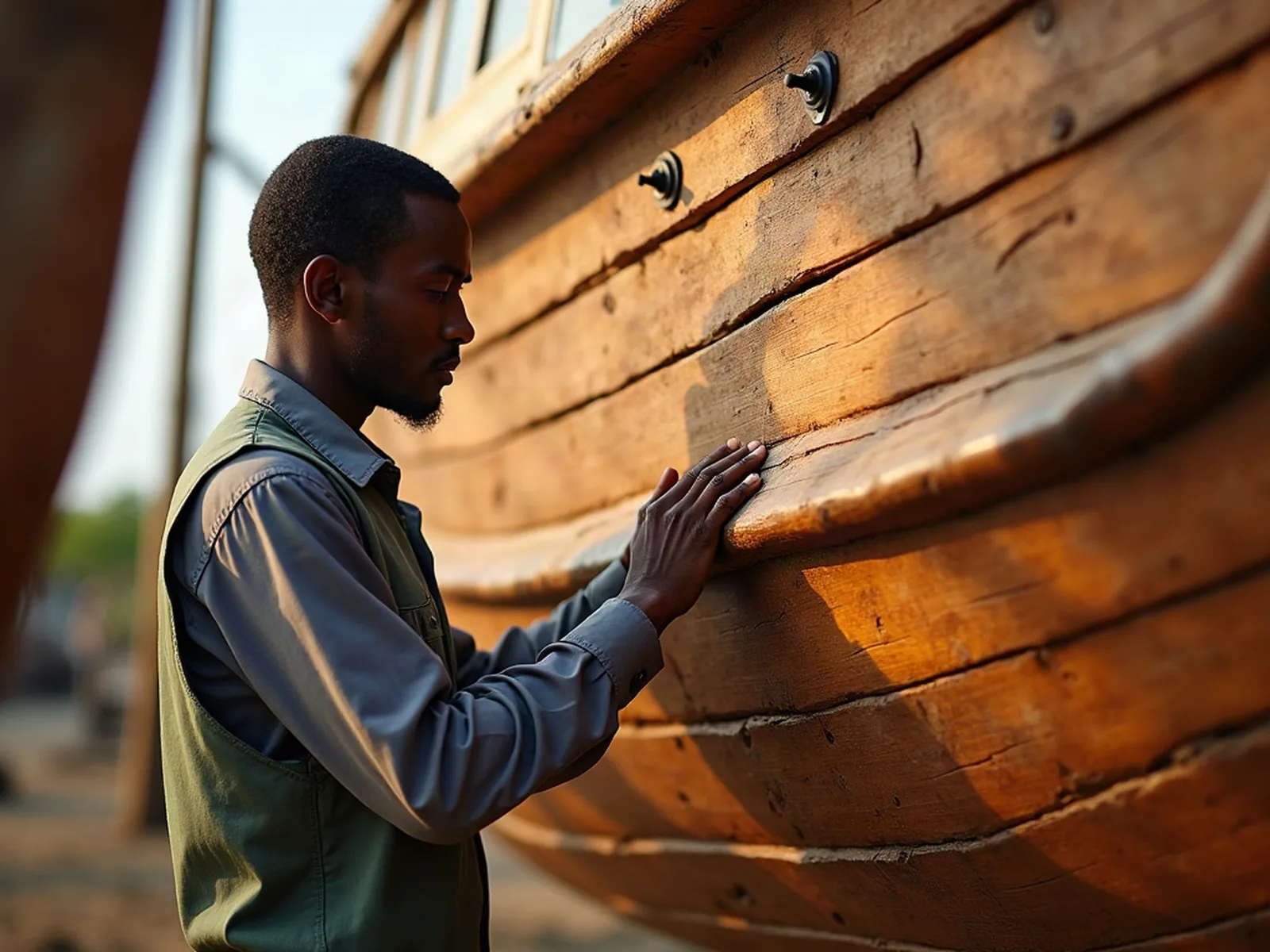
A phinisi or wooden-boat survey is not a yacht survey with different wording. Timber fails from the inside — through fastening sickness, seam movement and rot at trapped end grain — so the inspection is physical: pick testing, fastening withdrawal, seam probing and moisture profiling, always with the vessel out of the water.
Indonesia builds more large wooden vessels than anywhere else on earth. The phinisi yards of Bulukumba and Tana Beru turn out ironwood and teak hulls by eye and by tradition, without drawings and generally outside class. Many are excellent. Some are not. The difference is invisible from the dock and obvious to anyone willing to put a spike into the planking.
What kills a wooden hull in tropical service
| Failure mode | Where it starts | How we find it |
|---|---|---|
| Fastening sickness | Iron or galvanised fastenings corroding inside the timber, blackening the wood around them | Withdraw sample fastenings in agreed locations; look for nail-sick staining and weeping at plank lands |
| Rot in trapped end grain | Bulkhead ends, frame heads, deck beam ends, under the sole, behind ceiling | Pick test with a spike, moisture readings above 25 %, smell, sounding for hollowness |
| Seam and caulking failure | Garboard, topsides above the waterline where drying and swelling cycle | Seam probing, evidence of repeated re-caulking, cotton or oakum condition |
| Marine borer (teredo, gribble) | Below the waterline where anti-fouling has failed, around through-hulls | Underwater inspection, spike testing suspicious areas, tapping for hollowness |
| Distortion and hogging | Long unsupported hulls, heavy engine installations, poor lay-up support | Sheerline check by eye and by string, plank land alignment, door and hatch fit |
| Later engine installation | Engine beds tied into structure never designed for the load | Bed fastening inspection, hull deflection around beds, alignment under load |
The survey is destructive — by agreement, and in writing
You cannot survey a timber hull honestly without breaking its surface. Pick testing leaves marks. Withdrawing a fastening leaves a hole. We agree the number and location of test points with the owner before we start, we photograph each one, and we make good where the owner requires it. Any surveyor who promises a full wooden-hull assessment with no physical testing is promising a walkthrough.
Liveaboard dive boats: the extra layer
A phinisi operating as a liveaboard is a passenger-carrying vessel with a compressor, a large fuel load, cabins full of sleeping people and, frequently, a tender fleet. The structural survey is the same; the operational survey is not.
Liveaboard operational checks
- Life-saving appliances against the actual maximum persons on board, not against the certificate.
- Firefighting: engine-room fixed system if fitted, portable extinguishers in date, escape routes from every cabin, and whether cabin doors actually open outward or jam.
- Compressor installation — intake position relative to engine exhaust, filter change records, and air quality test results if available. Carbon monoxide contamination of dive air is the single worst outcome on this vessel type.
- Fuel system: tank construction and venting, transfer arrangements, and separation from accommodation.
- Electrical: generator installation, shore-power isolation, and cabin wiring standard — added cabins are frequently wired informally.
- Bilge pumping and alarms serving every compartment, including the forward spaces that flood first.
- Tender and dive-deck arrangements, ladder security, and man-overboard recovery capability.
- Navigation and communications appropriate to the operating area, including satellite where the itinerary leaves coverage.
Where these vessels are, and where we survey them
Most large wooden hulls in Indonesia sit in four places: the building beaches and slipways of Bulukumba and Tana Beru in South Sulawesi; the operating fleets in Labuan Bajo working Komodo; the Bali charter fleet around Benoa and Serangan; and Raja Ampat and Sorong in the east. We attend all four. Haul-out facilities differ enormously — a Tana Beru beach slipway gives excellent access to the whole hull, while some Labuan Bajo options are limited, which affects both scope and scheduling.
If you are still choosing a vessel, browse phinisi listings before booking a survey and send us the shortlist — surveying two candidates in one trip costs less than two separate mobilisations. Where a hull came from one of the traditional Tana Beru wooden-boat builders we survey, we can usually establish who built her and when, which is worth more than any paperwork the seller holds.
Planning to buy a Komodo phinisi? Survey her before you commit
The Komodo and Labuan Bajo charter fleet turns over regularly, and vessels are frequently sold mid-season with bookings attached. That is a commercial attraction and a survey risk at the same time: a vessel in continuous charter service has been maintained to keep sailing, which is not always the same as maintained to keep her structure sound. If you are looking at Komodo-based phinisi and liveaboards currently for sale, build a survey window and a slipway slot into the offer before the season locks the yard.
Frequently asked questions
Is a phinisi survey different from a yacht survey?
Substantially. Timber is assessed by physical testing rather than by instrument readings alone, the vessel must be hauled out, and construction is traditional rather than to a drawing — so the surveyor is assessing craft quality and repair history as much as measurable condition.
Can you survey a liveaboard dive boat in Indonesia?
Yes, and we recommend the combined scope: structural survey plus the operational and safety layer covering LSA, firefighting, compressor installation, escape routes and bilge arrangements.
Does the vessel have to be out of the water?
For a purchase decision, yes. Fastening condition, seams, garboards and borer damage cannot be assessed afloat, and roughly half of the serious wooden-hull findings we write come from below the waterline.
How long does a phinisi survey take?
Typically two days on a 25–35 m hull, with slipway time arranged around the yard’s schedule. Reports run five to seven working days because timber findings need careful photographic support.
What is a realistic remaining life for a well-built phinisi?
Properly built in ironwood and maintained — re-caulked, re-fastened where needed, kept working — these hulls run for decades. Badly built, or left idle in fresh-water-fed estuaries, they can be structurally finished in ten years. The survey tells you which one you are looking at.
Can you value a wooden vessel?
Yes, normally on a depreciated replacement cost basis because comparable sales evidence is thin. See condition and valuation surveys.
Do you survey vessels under construction at a yard?
Yes — new-build inspection at agreed stages is a separate engagement and is far more useful than a single survey at delivery, because timber work is buried as construction proceeds.
Request a phinisi, liveaboard or wooden-boat survey
Send the vessel details, the port where she lies and your target date. We reply with surveyor availability, a written scope and a fee band before anyone boards.
WhatsApp +628113823875 sales@komodoluxury.com
Yacht & leisure desk · fees quoted in USD · report issued in English