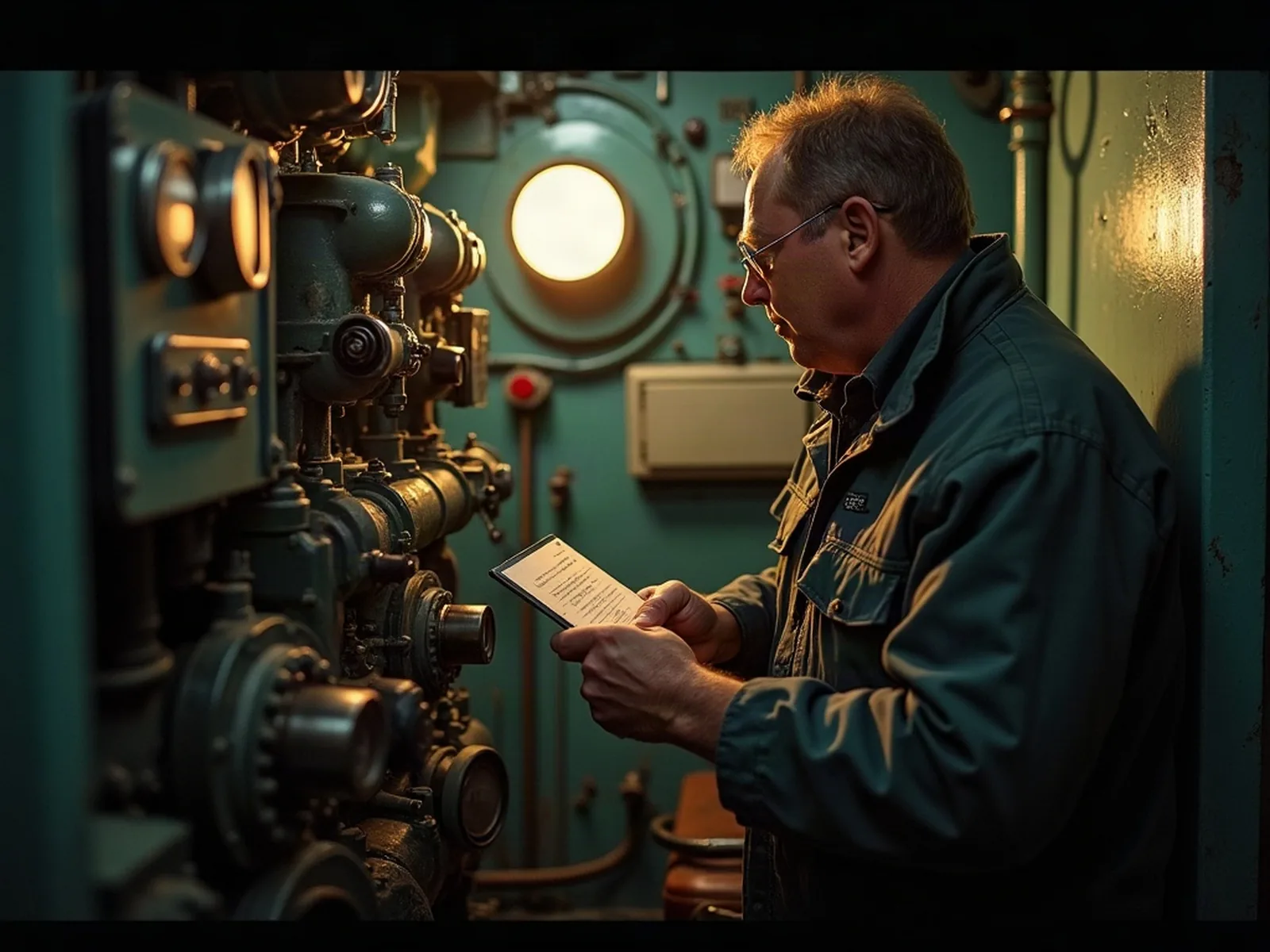
Statutory, class and flag-state surveys deal with a vessel’s right to trade rather than her market value. They cover tonnage measurement for registration, class survey cycles and their windows, MARPOL, ISM and ISPS condition, and load line and freeboard. We advise, prepare and attend — the certificates themselves are issued by the authorised body.
This is the area where owners most often lose money to avoidable delay. A vessel arrives at a yard for a routine docking, and discovers that the intermediate class survey window closed six weeks ago, that the load line certificate lapses mid-voyage, and that the tonnage certificate describes a superstructure that was rebuilt two years ago. Every one of those is inexpensive to plan and costly to discover.
Tonnage measurement and Indonesian flag registration
Tonnage is a volume, not a weight, and it drives almost everything administrative about a vessel: registration category, manning, dues, survey regime and often insurance banding. Gross tonnage is calculated from the total enclosed volume of the vessel; net tonnage from the volume available for cargo and passengers, adjusted for draught and depth.
| Concept | What it measures | Where it bites |
|---|---|---|
| Gross tonnage (GT) | Total enclosed volume, all spaces | Registration class, manning scale, survey regime, port dues |
| Net tonnage (NT) | Earning volume after deductions | Canal and port dues, some taxation |
| Deadweight (DWT) | Carrying capacity in tonnes | Commercial capacity — not a tonnage measurement |
| Displacement | Weight of water displaced | Draft survey, stability, docking |
Practical points that matter for vessels changing hands or being rebuilt in Indonesia:
Tonnage traps
- Any structural change to enclosed volume — a new deckhouse, an enclosed aft deck, a raised bulwark — can change gross tonnage and therefore the registration category. Re-measurement is required, and it is far less costly before the work is signed off than after.
- A vessel measured under a foreign regime does not automatically carry that tonnage onto the Indonesian register; re-measurement is common on import and registration.
- Traditional wooden vessels are frequently under-measured historically. If you are buying a phinisi to operate commercially, treat the existing tonnage figure as provisional until verified.
- Manning requirements step with tonnage bands, so a small measurement change can move the required certificates of competency for the whole crew.
Class survey cycles and their windows
Classification runs on a five-year cycle. The intervals matter because they are not advisory — a certificate outside its window is a certificate that has lapsed, and a lapsed class means, in practice, no valid hull cover.
| Survey | Interval | Window | Principal scope |
|---|---|---|---|
| Annual survey | 12 months | ±3 months of anniversary | General condition, load line items, safety equipment, hull and machinery overview |
| Intermediate survey | Between 2nd and 3rd anniversary | Within that period | Extended hull examination, tanks, sometimes thickness measurement |
| Class renewal / special survey | 5 years | Can be commenced from 4th anniversary | Full hull and machinery examination, extensive thickness measurement, tank testing |
| Docking survey | Two in five years, max 36 months apart | As scheduled | Underwater hull, rudder, propeller, sea valves, shaft clearances |
| Tailshaft survey | Typically 5 years, longer with approved oil-lubricated arrangements | As scheduled | Shaft withdrawal or in-place examination, bearing clearances, crack detection |
MARPOL, ISM and ISPS condition work
For vessels in international trade these three regimes generate most of the port state control detentions we see in Indonesian ports. A condition survey ahead of an audit or inspection is far far less costly than a detention.
- MARPOL. Oily water separator condition and alarm function, oil record book consistency against the actual system, sewage treatment, garbage management plan and placards, and the condition of the pipework that inspectors trace by hand.
- ISM. Whether the safety management system on paper matches what the crew actually does — drills recorded and performed, non-conformities closed out, maintenance records live rather than back-filled, master’s review completed.
- ISPS. Ship security plan currency, access control in practice, restricted-area marking, security drills and records, and the declaration of security procedure with terminals.
- Load line. Freeboard marks legible and correctly positioned, closing appliances weathertight, air pipes and ventilators intact, freeing ports clear, hatch securing complete.
Frequently asked questions
What does tonnage measurement mean for a vessel?
It establishes the vessel’s gross and net tonnage — measures of enclosed and earning volume — which determine registration category, manning, dues and the applicable survey regime. It is not a measure of weight or carrying capacity.
Who can issue a tonnage measurement certificate in Indonesia?
Tonnage certificates for Indonesian-flag vessels are issued under the authority of the Directorate General of Sea Transportation, through its authorised offices or a recognised organisation. An independent surveyor can measure, prepare the calculation and attend, but does not issue the certificate.
What is a MARPOL compliance survey?
A condition inspection against the MARPOL annexes applicable to the vessel — principally oil, sewage, garbage and air emissions — checking equipment function, record-book consistency and physical arrangements. It is preparatory and advisory; statutory certification remains with the flag or its recognised organisation.
Can you help with class renewal preparation?
Yes. Pre-docking condition work, thickness measurement planning, tank and structure preparation advice and defect listing before the class surveyor attends routinely shorten the docking and reduce the surprise items.
What happens if a class survey window is missed?
Class is suspended and, in most policies, hull cover follows it. Reinstatement requires the society’s own procedure and usually a more extensive survey than the one that was missed.
Do you attend port state control inspections?
We can attend on the owner’s behalf as a technical adviser and produce a rectification plan after deficiencies are raised. We are not a substitute for the vessel’s master or the recognised organisation.
Is a load line certificate needed for domestic trade?
Requirements depend on the vessel’s size, trading area and flag category. We will tell you what applies to your specific vessel rather than give a blanket answer.
Discuss a statutory, class or tonnage engagement
Tell us the vessel, port, cargo and date window. Our commercial and cargo desk confirms surveyor availability and a written scope before attendance.
WhatsApp +6281139414563 bd@juaraholding.com
Commercial & cargo desk · fees quoted in USD · report issued in English