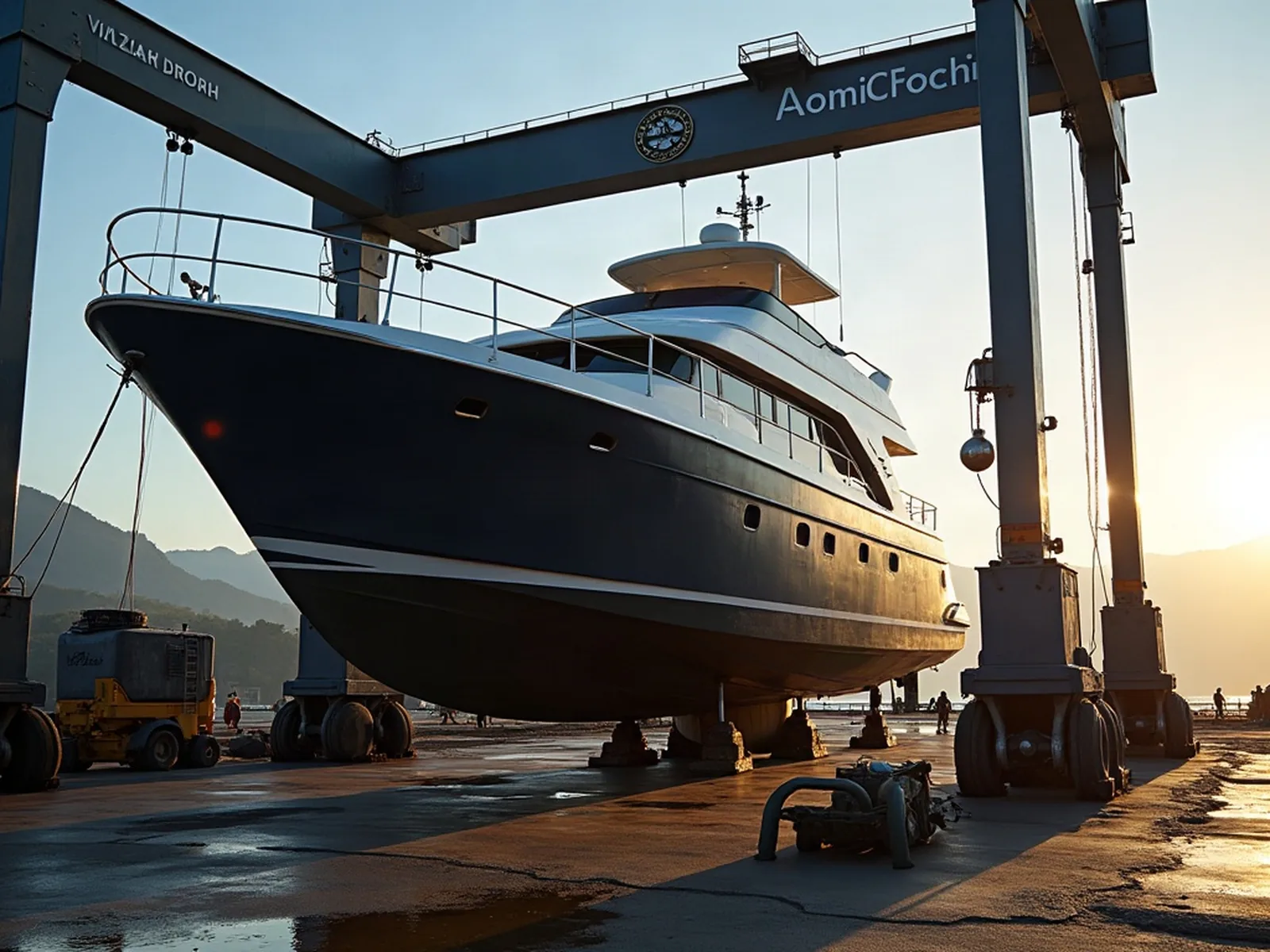
A pre-purchase marine survey in Indonesia is an independent condition inspection carried out before you pay. It covers hull structure, machinery, systems, safety equipment and a sea trial, and is delivered as an English report with photographs, a defect list graded by urgency and a market-value opinion you can hand to an insurer or a bank.
A pre-purchase survey exists for one reason: to move risk off the buyer before the money moves. In Indonesia that matters more than in most markets. Vessels here are often built or rebuilt outside class, maintenance records are thin or verbal, tropical humidity accelerates corrosion and osmosis, and a boat can change hands three times without a single written condition record following her.
We attend as an independent desk. We are not the broker, not the yard and not the seller’s agent, and our fee does not change if the deal collapses. That separation is the product.
What a pre-purchase marine survey covers
Scope is agreed in writing before attendance. A full pre-purchase survey on a leisure or light commercial vessel normally has five blocks:
| Block | What is inspected | Method | Typical evidence in the report |
|---|---|---|---|
| Hull & structure | Plating or planking, keel, stem, transom, bulkheads, stringers, through-hulls, rudder and shaft bearings, anodes | Visual, hammer sounding, moisture meter on GRP, ultrasonic thickness on steel, pick test on timber | Photo log, thickness map, wastage percentage, moisture readings |
| Machinery | Main engines, gearbox, shafting, generators, cooling, fuel and exhaust systems | Cold start, running observation, oil and coolant condition, optional oil analysis | Hours, smoke and temperature notes, leak points, oil sample result |
| Systems | Electrical distribution, batteries, bilge pumping, steering, fresh water, sanitation, air conditioning, navigation and comms | Function test under load where safe | Function pass or fail per item, insulation and earthing observations |
| Safety & statutory | Life-saving appliances, firefighting, gas installation, certificates, registration and tonnage documents | Inventory check against the vessel’s own documents | Expiry table, missing-item list, document gaps |
| Sea trial | Performance under way, manoeuvring, vibration, steering, alarms, charging | Attended trial at the buyer’s cost, normally 60–120 minutes | RPM versus speed table, temperature and pressure log, handling notes |
How the survey runs, step by step
- Brief. You send the vessel name or listing, the port where she lies, her type, length and build year, and your target date. We confirm surveyor availability, the written scope and a fee band before anyone travels.
- Access arrangements. We tell the seller or broker exactly what is required: vessel afloat and alongside, tanks and lockers opened, engine cold on arrival, and a haul-out slot if underwater inspection is in scope.
- Attendance. Afloat inspection first, then haul-out if arranged, then the sea trial. On a 15–25 m vessel this is normally one to two days.
- Verbal preliminary. Within hours of leaving the vessel you get the deal-breakers by phone or WhatsApp, so you are not negotiating blind while the written report is produced.
- Written report. Delivered in English, typically three to seven working days depending on vessel size and whether laboratory results are pending.
- Follow-up. One round of clarification is included. If you renegotiate on the findings we can price the defect list as a repair scope.
What a haul-out adds — and when to insist
Roughly a third of the serious findings we write are only visible with the vessel out of the water. On a steel or aluminium hull that means real plate thickness rather than an assumption; on GRP it means blister mapping and a meaningful moisture profile once the hull has dried; on timber it means fastening condition, garboard seams and worm damage.
Insist on a haul-out when
- Any steel or aluminium vessel over roughly 12 years old, or any hull with unknown plating history.
- Any GRP hull where you intend to insure for an agreed value rather than market value.
- Every traditional timber hull, without exception — a wooden hull cannot be honestly assessed afloat.
- Any vessel where the seller declines to show recent slipway photographs.
Indicative fee bands
Fees are quoted in USD per engagement and confirmed in writing before attendance. The bands below are indicative for an afloat pre-purchase survey with sea trial at a main port; travel, accommodation, haul-out, crane, diver and laboratory costs are separate and quoted at cost.
| Vessel size | Afloat + sea trial | Add haul-out attendance | Typical report turnaround |
|---|---|---|---|
| Under 12 m | USD 650 – 1,100 | USD 250 – 450 | 3 working days |
| 12 – 18 m | USD 1,100 – 1,900 | USD 350 – 600 | 4 working days |
| 18 – 25 m | USD 1,900 – 3,200 | USD 500 – 900 | 5 working days |
| 25 – 40 m | USD 3,200 – 6,000 | USD 800 – 1,500 | 5 – 7 working days |
| Over 40 m / commercial | Quoted per case | Quoted per case | Agreed in scope |
Full working of what moves a fee up or down — remoteness, vessel condition, whether the yard charges for access, laboratory work — is set out on the marine survey cost page.
Ask a surveyor: I am a foreign buyer, how do I arrange a survey in Indonesia?
You do not need to be in the country, and you do not need an Indonesian company. In practice the sequence is: you send us the listing and the port; we confirm a surveyor and a fee band in USD; you confirm by email or WhatsApp and we invoice; we deal directly with the broker or owner for access; we attend and send you a verbal preliminary the same day; the written English report follows.
Two things are worth knowing before you commit. First, the seller controls access, so build a survey window into your offer — a clause that makes the deposit refundable on an adverse survey is normal here and rarely refused. Second, Indonesian ports are spread over 5,000 km; a surveyor already working in Batam cannot be in Labuan Bajo the next morning, so give a date range rather than a single day and the fee will be lower because travel can be shared.
If the vessel is a foreign-flag yacht you intend to keep in Indonesia, ask us at the brief stage to include a documentation review. Flag, tonnage and import status change what the vessel can legally do here, and those are far less costly to resolve before purchase than after.
Frequently asked questions
What is included in a pre-purchase marine survey?
Hull and structure, machinery and shafting, electrical and bilge systems, steering, safety and firefighting equipment, a document and certificate check, and a sea trial. The report closes with a defect list graded urgent / short-term / monitor and a market-value opinion.
How long does a pre-purchase survey take?
One day on a vessel under 15 m, one to two days from 15 to 25 m, and two to three days above that or where a haul-out and separate sea trial day are involved. The written report follows in three to seven working days.
Should the buyer or the seller pay for the survey?
The buyer appoints and pays. That is what makes the report independent and what makes it useful to your insurer. A survey paid for by the seller is a sales document, not a condition record.
Can the report be used for insurance?
Yes. Underwriters normally accept a recent independent condition survey with photographs, a thickness or moisture record and a valuation opinion. Tell us at the brief stage that the report is for insurance and we will format the recommendations accordingly.
Do you survey vessels that are not for sale through a broker?
Yes. Private sales are common in Indonesia and are exactly where an independent survey earns its fee, because there is no listing paperwork to fall back on.
What happens if the survey finds serious defects?
You get the finding verbally the same day, and the written report grades it. From there most buyers either renegotiate against a priced repair scope, ask for the defect to be rectified before completion, or walk away. All three are better outcomes than discovering it afterwards.
Do you attend sea trials separately from the survey?
We can. Some buyers commission an afloat inspection first, then a sea trial once the price is provisionally agreed. It costs slightly more in total but avoids paying for a trial on a vessel the hull inspection has already ruled out.
Is the report in English?
Yes, English is the default. An Indonesian-language summary can be added on request — see jasa survey kapal.
Request a surveyor
Send the vessel details, the port where she lies and your target date. We reply with surveyor availability, a written scope and a fee band before anyone boards.
WhatsApp +628113823875 sales@komodoluxury.com
Yacht & leisure desk · fees quoted in USD · report issued in English