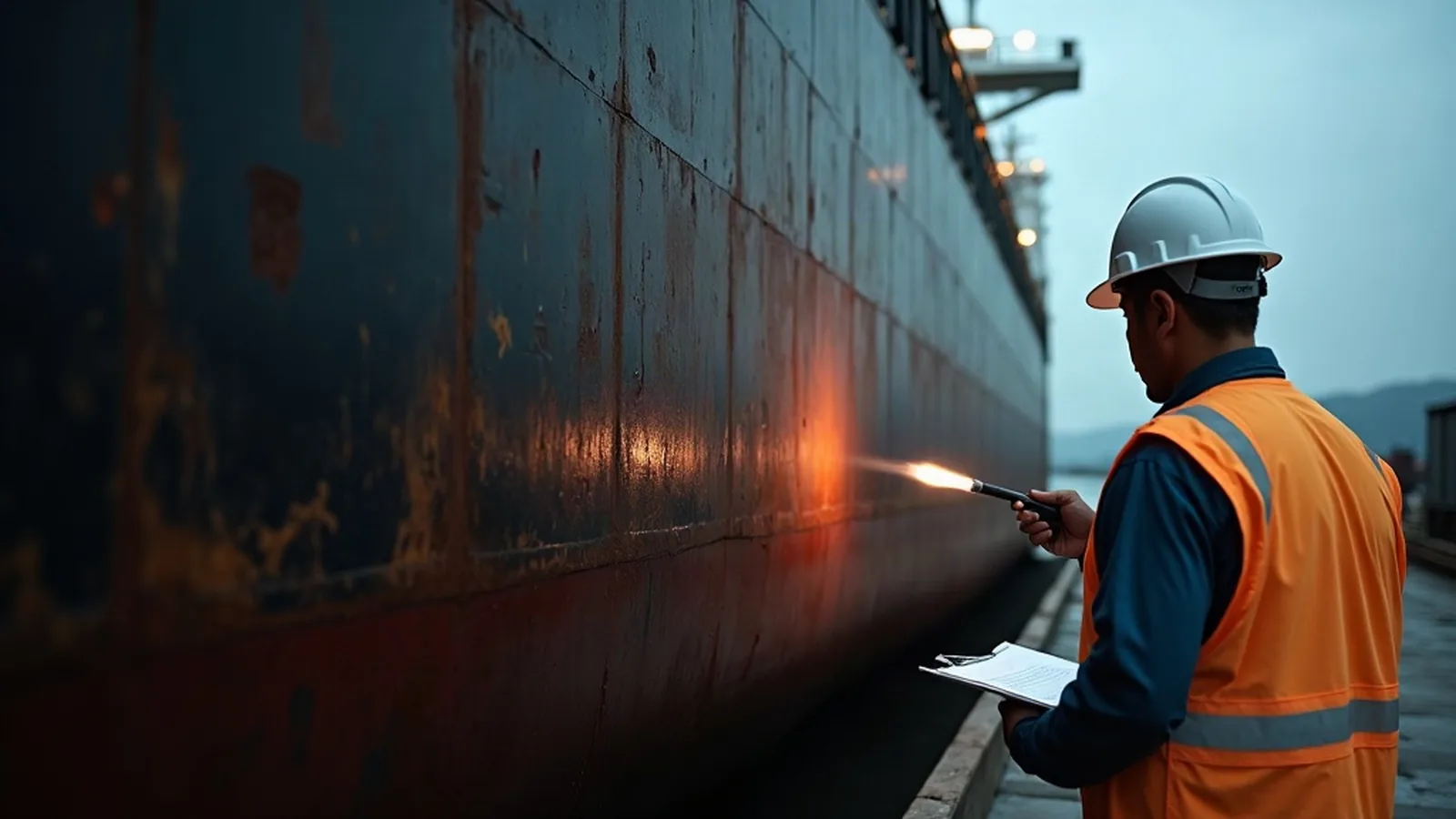
A marine surveyor inspects vessels, cargo and marine equipment and reports condition, damage, quantity or compliance to whoever carries the risk. In Indonesia the role splits into four specialisations — yacht and small craft, commercial hull and machinery, cargo and quantity, and statutory and tonnage — and the wrong specialist produces a report you cannot use.
Ask ten people in an Indonesian port what a marine surveyor does and you will get ten answers, most of them partly right. The confusion costs money, because a buyer who commissions a cargo surveyor to inspect a yacht gets a document that reads competently and answers none of the questions that matter.
The four specialisations
| Specialisation | Typical work | Who instructs |
|---|---|---|
| Yacht and small craft | Pre-purchase, condition, insurance survey on leisure and light commercial vessels | Buyers, owners, yacht underwriters |
| Commercial hull and machinery | Condition, thickness measurement, damage, pre-docking, new-build stage inspection | Owners, charterers, hull underwriters, banks |
| Cargo and quantity | Draft, bunker, cargo condition and outturn, tally, on/off-hire | Traders, charterers, receivers, cargo underwriters, terminals |
| Statutory, class and tonnage | Tonnage measurement, class cycle preparation, MARPOL, ISM and ISPS condition, load line | Owners, flag applicants, managers |
What a surveyor is not
- Not a class society. Independent surveyors do not issue class certificates.
- Not a flag authority. Statutory certificates come from the flag or its recognised organisation.
- Not a mechanic. Machinery is assessed, not overhauled, and opening up is a separate scope.
- Not a lawyer. A surveyor reports technical fact and opinion; liability is decided elsewhere.
- Not a valuer of last resort. A supported valuation needs a stated method, not a guess.
Five questions that separate a real surveyor from a walkthrough
- Who pays you, and does your fee change if the deal completes? The only acceptable answers are “you” and “no”.
- Can I see a redacted sample report? If the answer is no, stop.
- What instruments will you use, and will the readings be in the report? Adjectives are not data.
- What will not be inspected? A surveyor who cannot answer this quickly has not thought about scope.
- How many of this vessel type have you surveyed? Specific numbers, not “many years of experience”.
Frequently asked questions
Do I need a surveyor if the vessel is in class?
Class confirms compliance with the society’s rules at the last survey. It does not tell you condition today, does not cover everything a buyer cares about, and is not a valuation.
Can the broker recommend a surveyor?
They can, and some recommendations are excellent. Appoint and pay the surveyor yourself regardless, and ask directly whether they have a working relationship with that broker.
How long has marine surveying existed as a profession?
Marine survey grew out of marine insurance in the seventeenth and eighteenth centuries. What has changed is instrumentation, not the underlying job: independent eyes on an asset someone is about to take a risk on.