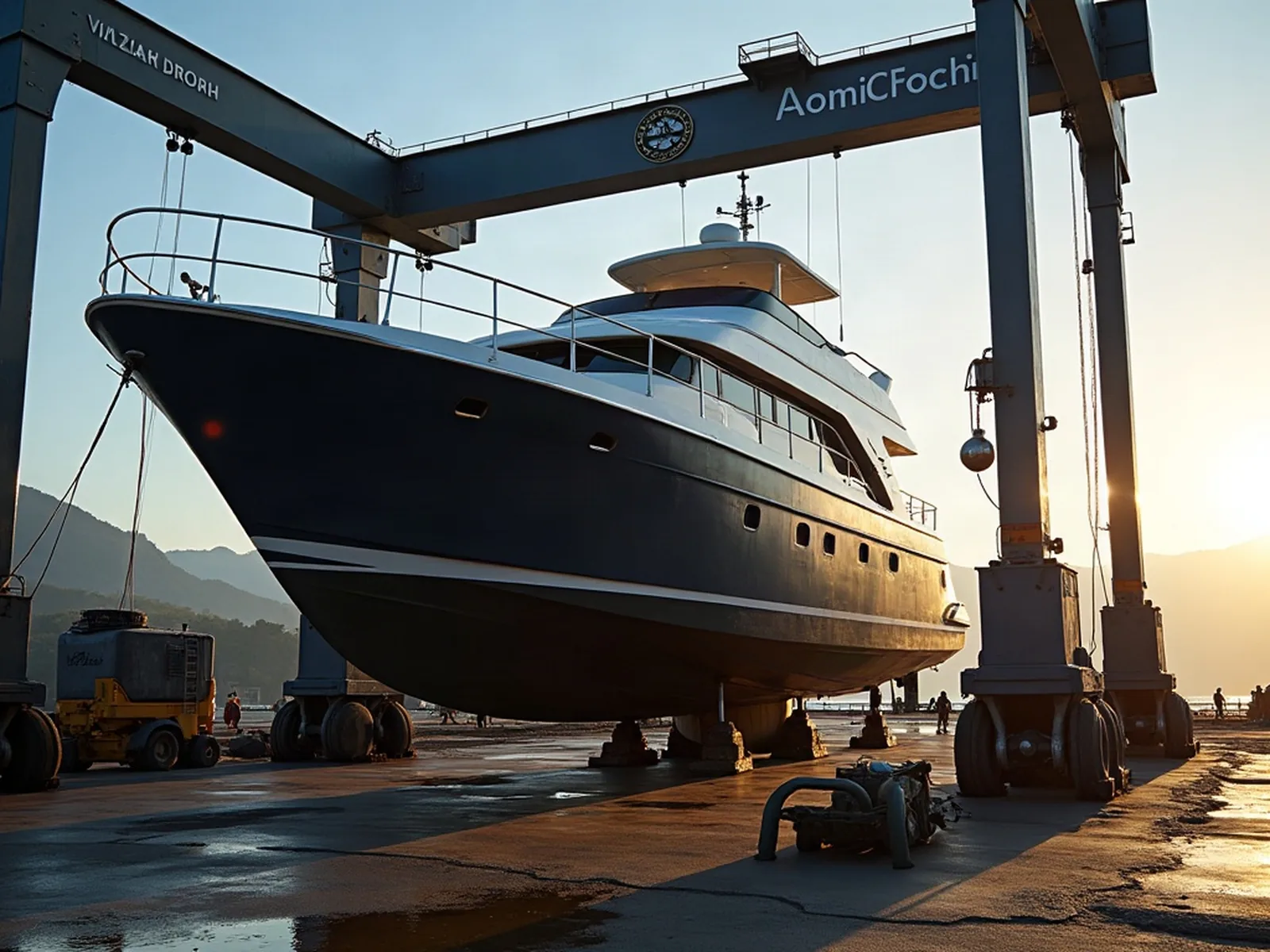
A full pre-purchase survey covers six areas: hull and structure, machinery and propulsion, systems, safety and firefighting equipment, documentation, and a sea trial. Anything excluded from those six should be listed explicitly in the scope before the surveyor travels.
This is the checklist we work from, published so you can compare it against whatever scope you are being quoted. If a quotation covers materially less than this, it is not less expensive — it is a different product.
1. Hull and structure
- External hull condition, fairness and evidence of previous repair.
- Underwater hull: plating or planking, keel and keel joint, rudder and bearings, propeller and shaft, cutless bearing, anodes, through-hulls and valves.
- Thickness measurement on steel and aluminium; moisture and percussion on GRP; pick and fastening testing on timber.
- Internal structure: frames, stringers, bulkheads and their attachment, tank tops, bilge condition.
- Deck and superstructure, hull-to-deck joint, hatches, ports, windows and their seals.
- Osmotic blistering, delamination or wet core mapped and photographed.
2. Machinery and propulsion
- Cold start observed — smoke colour and duration, starting aids used or not.
- Running observation: temperatures, pressures, leaks, mounts, alignment symptoms.
- Gearbox behaviour ahead and astern under load; oil condition.
- Shafting, couplings, stern gland, thrust arrangement.
- Generators under electrical load; hours and service records.
- Fuel system, tanks, filters, transfer, venting; exhaust system including elbows and risers.
- Cooling: raw water flow, heat exchangers, header tanks, cross-contamination checks.
- Oil samples taken for laboratory analysis where agreed.
3. Systems
- Electrical distribution, batteries and charging under real load; shore power isolation.
- Bilge pumping and high-level alarms in every compartment.
- Steering including emergency steering; autopilot function.
- Fresh water, watermaker, sanitation and holding arrangements.
- Air conditioning and refrigeration.
- Navigation, communications and their currency.
4. Safety and firefighting
- Life-saving appliances against actual maximum persons on board.
- Liferafts, EPIRB and pyrotechnics with service and expiry dates tabulated.
- Portable extinguishers and any fixed engine-room system, with service dates.
- Gas installation where fitted: bottle stowage, drain, alarm, pipework.
- Escape routes from every cabin, tested rather than assumed.
5. Documentation
- Registration, tonnage and flag documents checked against the physical vessel.
- Hull identification and engine serial numbers physically verified.
- Class status and certificate currency where applicable.
- Previous survey reports and evidence that recommendations were closed out.
- Service records, running hours and their credibility against observed wear.
6. Sea trial
- Full-throttle RPM against propeller specification.
- Vibration through the range; steering lock to lock; astern stopping.
- Temperatures and pressures logged at cruise and full load.
- Charging and electrical behaviour with all loads running.
- Alarm function; manoeuvring alongside; thrusters.
Frequently asked questions
Can I use this checklist myself?
You can, and you should walk a vessel with it before spending money on a survey — it will eliminate obvious candidates. It is not a substitute for instrumented inspection.
How much of the checklist needs the vessel out of the water?
The whole of the underwater section, which is where roughly a third of serious findings come from.
Is the checklist different for a commercial vessel?
The structure is the same; cargo systems, cargo gear, hold condition and certification replace the leisure-specific items. See commercial vessel surveys.