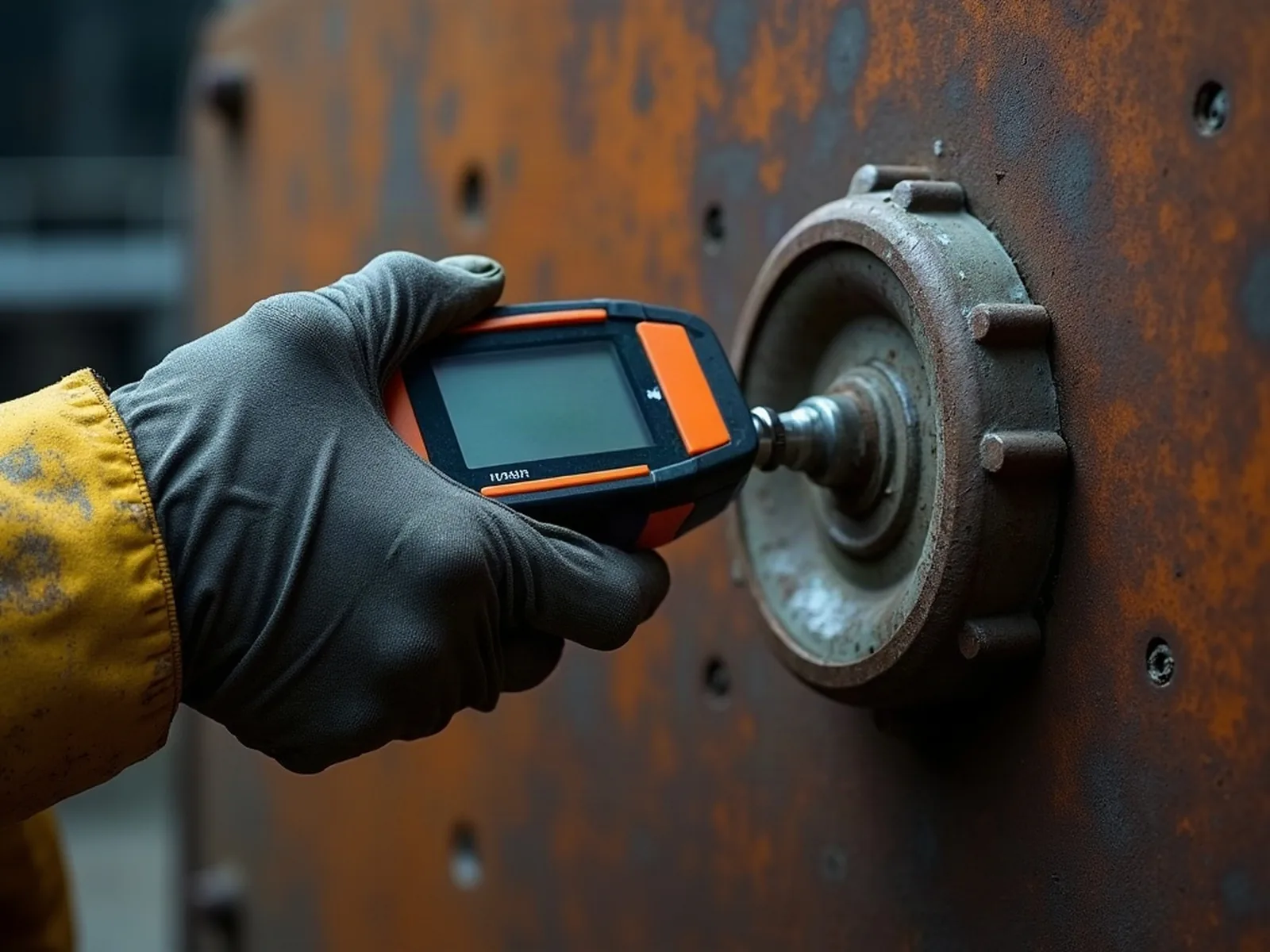
A condition survey describes overall state and grades defects for an owner, insurer or buyer. A hull and machinery survey measures structure and propulsion with instruments — ultrasonic thickness, coating grading, machinery trial data — and reports wastage as numbers. One is an assessment; the other is a measurement exercise.
Side by side
| Condition survey | Hull & machinery survey | |
|---|---|---|
| Primary question | What state is she in, and what needs doing? | How much structure and machinery life is left, in measurable terms? |
| Typical reader | Owner, underwriter, buyer | Underwriter, bank, buyer, class preparation |
| Instruments | Moisture meter, percussion, visual, function testing | Ultrasonic thickness on a planned grid, coating grading, oil analysis, trial data |
| Output | Graded defect list, condition grade, recommendations | Thickness map with wastage percentages, machinery condition assessment, renewal advice |
| Duration | Half a day to two days | One to four days depending on grid size |
| Indicative fee | USD 1,400 – 6,500 | USD 2,000 – 7,500 |
When a condition survey is enough
- Insurance renewal on a well-documented vessel with a recent thickness record.
- A GRP or composite leisure vessel, where thickness measurement in the steel sense does not apply.
- A purchase where the structural history is documented and the concern is systems and machinery.
- Lay-up condition, pre-season fleet inspection or close-out of previous recommendations.
When you need hull and machinery
- Any steel or aluminium hull over about twelve years old with an unknown plating history.
- Any vessel with visible doubler plates or undocumented repairs.
- Financing on a commercial vessel, where the lender needs remaining economic life.
- Preparation for a class renewal survey, so the steel is ordered before the vessel docks.
- Any purchase where the price assumes the hull will last another decade.
Cost of getting it wrong
The expensive mistake runs one way. A hull and machinery survey where a condition survey would have done costs you a few hundred dollars extra. A condition survey where an H&M survey was needed costs you a hull — because the wastage that decides whether the vessel is worth buying was never measured.
Frequently asked questions
Can one survey do both?
Yes, and that is usually the sensible answer on a steel vessel: a condition survey with a thickness measurement scope inside it, in one attendance, with one report.
Does a GRP yacht ever need a hull and machinery survey?
The machinery half, yes. The structural half is different: moisture mapping, percussion and agreed core samples replace ultrasonic thickness.
Which does an underwriter prefer?
It depends on vessel type and age. Ask them directly before instructing — underwriters are usually specific about what they will accept.