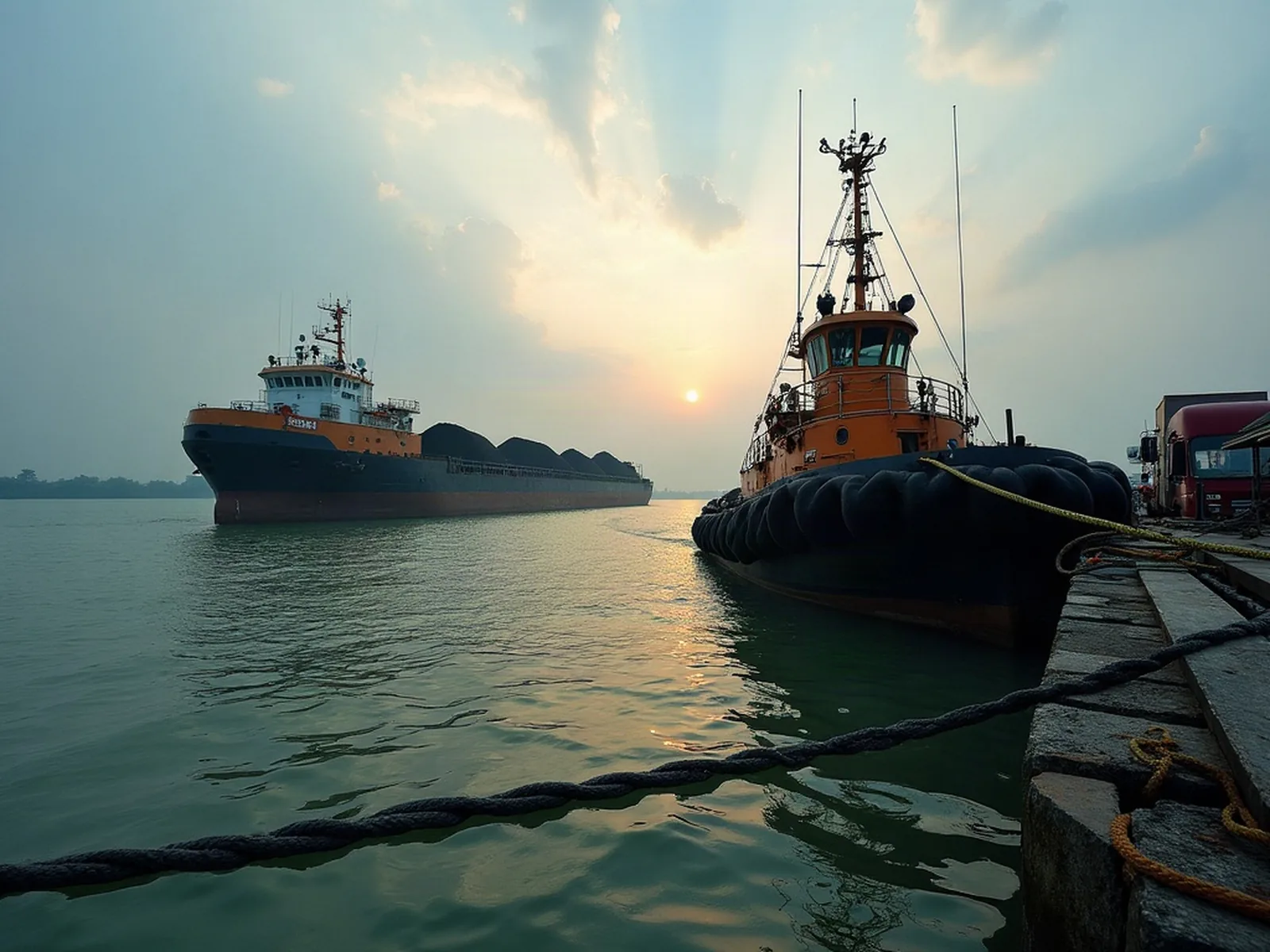
A towage approval survey assesses the tug, the barge, the cargo, the securing arrangement and the voyage together. It confirms bollard pull against the calculated requirement with a weather margin, checks sea-fastening against the design, and issues an approval, a conditional approval, or a refusal.
Underwriters require an approval survey before a loaded barge moves valuable cargo. It is not a condition survey with a different cover page: the question is whether this specific combination is acceptable for this specific voyage.
The five components
- Barge suitability. Structure and deck strength in way of the load, watertight integrity of voids and hatches, freeboard and stability with cargo aboard, securing point condition and rating.
- Cargo securing. Sea-fastening design reviewed against expected accelerations for the route and season; welding inspected; grillage, packing and lashings rated and documented.
- Tug suitability. Bollard pull against the calculated towing requirement including weather margin, towing gear condition and certification, emergency towing arrangement, machinery condition and redundancy.
- Voyage plan and weather criteria. Route, expected conditions, ports of refuge, and the weather window within which the tow may sail.
- Approval decision. Issued in writing with conditions explicitly listed — and where the arrangement is not acceptable, that is what the document says.
Void spaces decide most barge surveys
The most common serious finding on an Indonesian deck barge is water in void spaces nobody has sounded in years, entering through corroded manhole covers and cracked deck penetrations. It changes stability, accelerates internal corrosion and is entirely invisible from the deck. Every void, every time, sounded by the surveyor.
Bollard pull: the number and the evidence
| Question | What we look for |
|---|---|
| What is the tug’s bollard pull? | A dated bollard pull certificate from a recognised trial, not a builder’s brochure figure |
| Is the certificate still meaningful? | Engine and propulsion condition since the trial; a re-engined or worn tug does not deliver its original figure |
| What is required for this tow? | Calculated from barge and cargo resistance with a weather margin appropriate to the route and season |
| Is the towing gear rated for it? | Winch, wire, bridle, shackles and connections rated and certificated as a system |
| Is there an emergency arrangement? | Emergency towing gear that can be deployed by the crew actually aboard |
Frequently asked questions
What is a barge suitability survey?
An assessment of whether a specific barge is fit to carry a specific cargo on a specific voyage: structure, deck strength, stability, watertight integrity and securing.
Who instructs a towage approval survey?
Usually the underwriter, sometimes the cargo owner or the towage contractor. The report is issued to the instructing party.
How long does it take?
One to three days depending on cargo complexity, plus the report within three to seven working days. Book well before the intended sailing window.