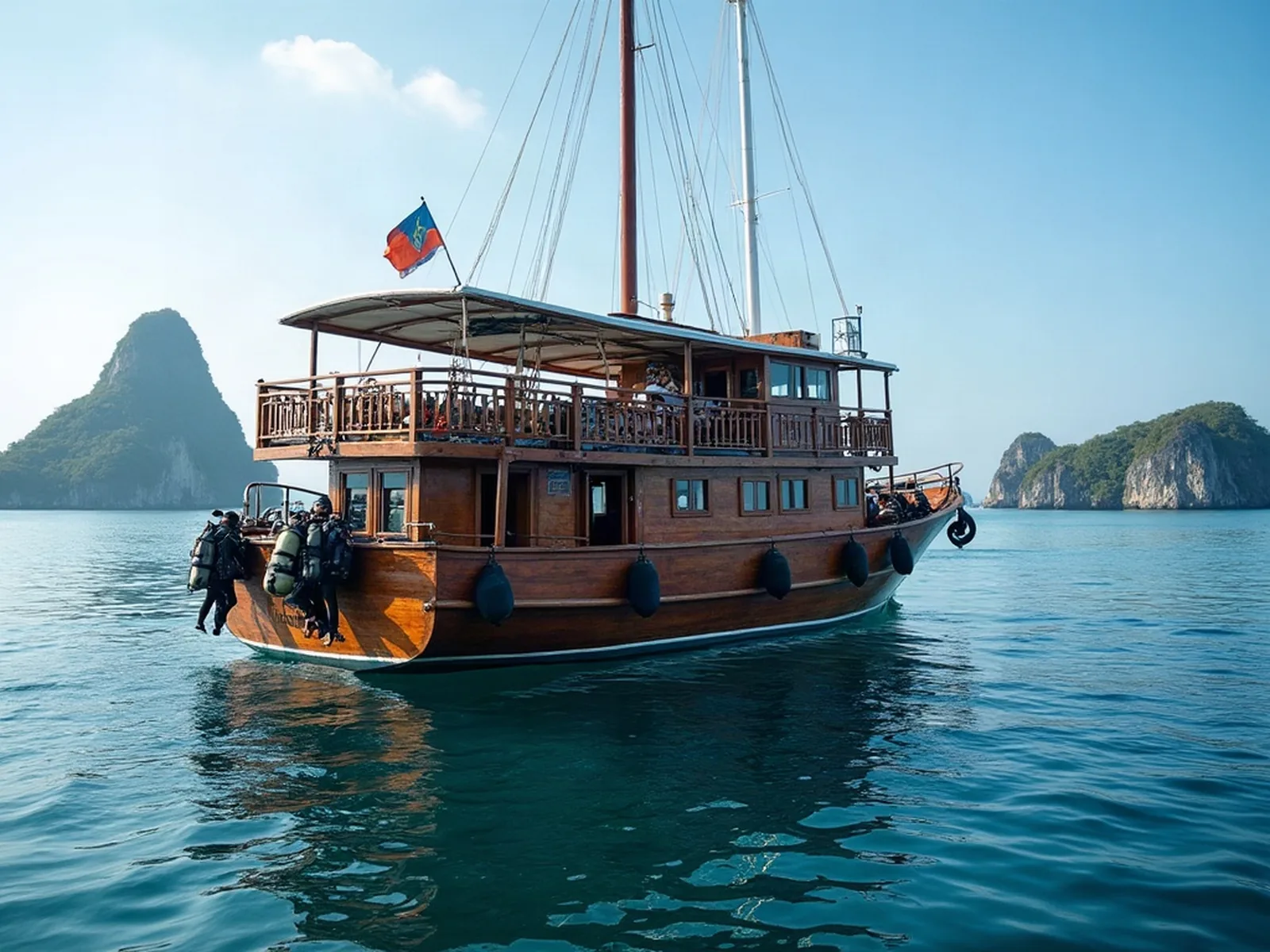
A liveaboard survey adds an operational layer to the structural one: life-saving appliances against actual maximum persons on board, firefighting and escape routes from every cabin, compressor installation and dive-air quality, bilge pumping and alarms in every compartment, and tender and recovery arrangements.
A phinisi working as a liveaboard is a passenger vessel with a high fuel load, a compressor, cabins full of sleeping guests and a tender fleet, operating in an area where outside help is hours away. The structural survey is the same as any wooden hull. The rest is not.
Life-saving appliances against real numbers
Count the berths, add the crew, and check the LSA against that number — not against the figure on a certificate written before the last two cabins were added. This is the single most common shortfall we find on the Komodo fleet, and it is also the easiest to fix.
Escape routes, tested
- Every cabin must have a route out that a sleeping guest could find and use in the dark.
- Doors that open outward or slide, not doors that jam against a bunk.
- Escape hatches that are not blocked by stored equipment or painted shut.
- Emergency lighting on an independent supply.
- Muster arrangements that make sense on that particular deck layout.
The compressor is the highest-consequence system aboard
Carbon monoxide contamination of dive air is the worst outcome on this vessel type, and it is almost always an installation problem rather than a compressor problem.
- Air intake position relative to the engine and generator exhausts, in the prevailing wind and at anchor as well as under way.
- Filter change records and hour meter, and whether they are consistent.
- Air quality test results — an independent test is inexpensive and should be routine.
- Cylinder inspection and hydrostatic test dates.
- Fill-station arrangement, whip condition and securing.
- Storage of full cylinders on deck, secured against movement.
Fire, fuel and electrics
Wooden vessels with a large fuel load and heavy generator use need a fixed engine-room fire system, not just extinguishers. We check the system’s charge and service date, the engine-room boundary, fuel shut-offs operable from outside the space, and whether added cabins have been wired informally — which on a converted phinisi is common.
Bilge pumping and alarms
Every compartment, particularly the forward spaces that flood first. Pumps tested rather than described, high-level alarms tested at the panel, and a manual backup that one crew member can operate alone.
Frequently asked questions
Can you survey a liveaboard in Labuan Bajo?
Yes — hull survey plus the operational and safety layer. Haul-out is arranged around slipway availability in Bali or South Sulawesi where local capacity is limited.
How long does a liveaboard survey take?
Two days for a 30–40 m phinisi including the operational layer, plus slipway time if a haul-out is in scope.
Do you inspect the tenders and dive equipment?
Tenders, davits, ladders and recovery arrangements yes. Individual dive equipment servicing is a specialist matter outside a marine survey.