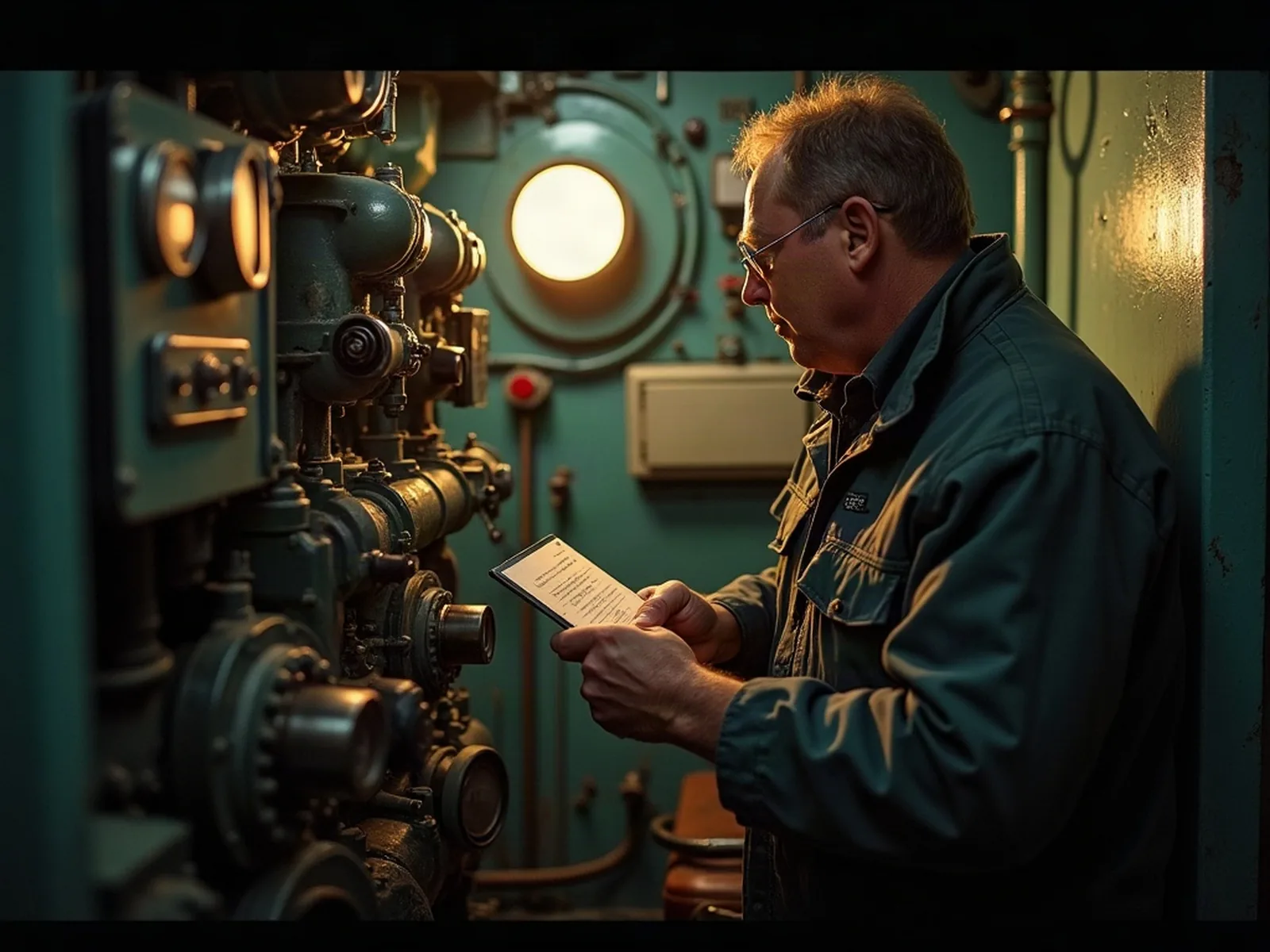
A sea trial reveals what a static inspection cannot: gearbox slip under load, exhaust elbow failure, charging faults, vibration from shaft misalignment, steering play and alarm function. A survey without a sea trial tells you what the vessel looks like, not what she does.
Buyers skip the sea trial to save a few hundred dollars and a half day. It is the worst trade in the whole purchase process, because most of the expensive failures on a used vessel only appear under load.
What only appears under load
| Symptom under way | Likely cause | Cost bracket if missed |
|---|---|---|
| Engine will not reach rated RPM at full throttle | Overpropped, fouled hull, turbo or injection degradation, exhaust restriction | From a propeller repitch to an engine rebuild |
| Gearbox slips or engages late, ahead or astern | Clutch pack wear, low or degraded oil, control linkage | Gearbox overhaul or replacement |
| Steam or water leak at the exhaust elbow when hot | Corroded riser or elbow — a classic tropical failure | Moderate, but ignored it hydrolocks an engine |
| Vibration at particular RPM | Shaft misalignment, bent shaft, damaged propeller, worn cutless bearing | From a propeller balance to a shaft renewal |
| Charging voltage collapses under load | Alternator, regulator or a battery bank that no longer accepts charge | Modest, but strands you |
| Steering heavy, notchy or with play | Rudder bearing wear, hydraulic air or leakage, quadrant wear | Moderate |
| Overheating after 20–30 minutes at cruise | Heat exchanger fouling, impeller wear, raw water restriction | Modest if caught; severe if it has already cooked something |
The observation checklist
- Cold start observed at the beginning — smoke colour and duration, starting aid use.
- Full-throttle RPM against the propeller and engine specification.
- Temperatures and pressures logged at idle, cruise and full load, and again after 30 minutes at cruise.
- Exhaust gas temperature spread across cylinders where instrumentation allows.
- Vibration by RPM, felt at the shaft log and at the helm.
- Gear engagement ahead and astern, repeatedly, with no slip or delay.
- Steering lock to lock, autopilot engagement, emergency steering tried.
- Full electrical load: air conditioning, watermaker, windlass and thrusters together.
- Astern stopping distance and handling alongside.
- Alarm test where the systems permit, and confirmation that no alarm is disabled.
- Bilges checked again after the trial — leaks show up under way that do not show at rest.
Practicalities
Sixty to a hundred and twenty minutes is enough for most vessels, and the last thirty minutes at sustained cruise matter more than the first ten. The buyer normally pays for fuel and crew. Go out with enough sea room to run at full load, and do not accept a trial confined to a harbour at idle speed.
Frequently asked questions
Who pays for the sea trial?
The buyer normally covers fuel and crew. The seller provides the vessel and the operator.
Can the sea trial be done on a different day from the survey?
Yes, and some buyers prefer it — afloat inspection first, sea trial once the price is provisionally agreed. It costs a little more in total but avoids paying for a trial on a vessel the hull inspection has already ruled out.
What if the vessel is on the hard and cannot be launched?
Then the report carries a substantial limitation and is a partial survey, priced as one. Machinery under load is simply not assessed.