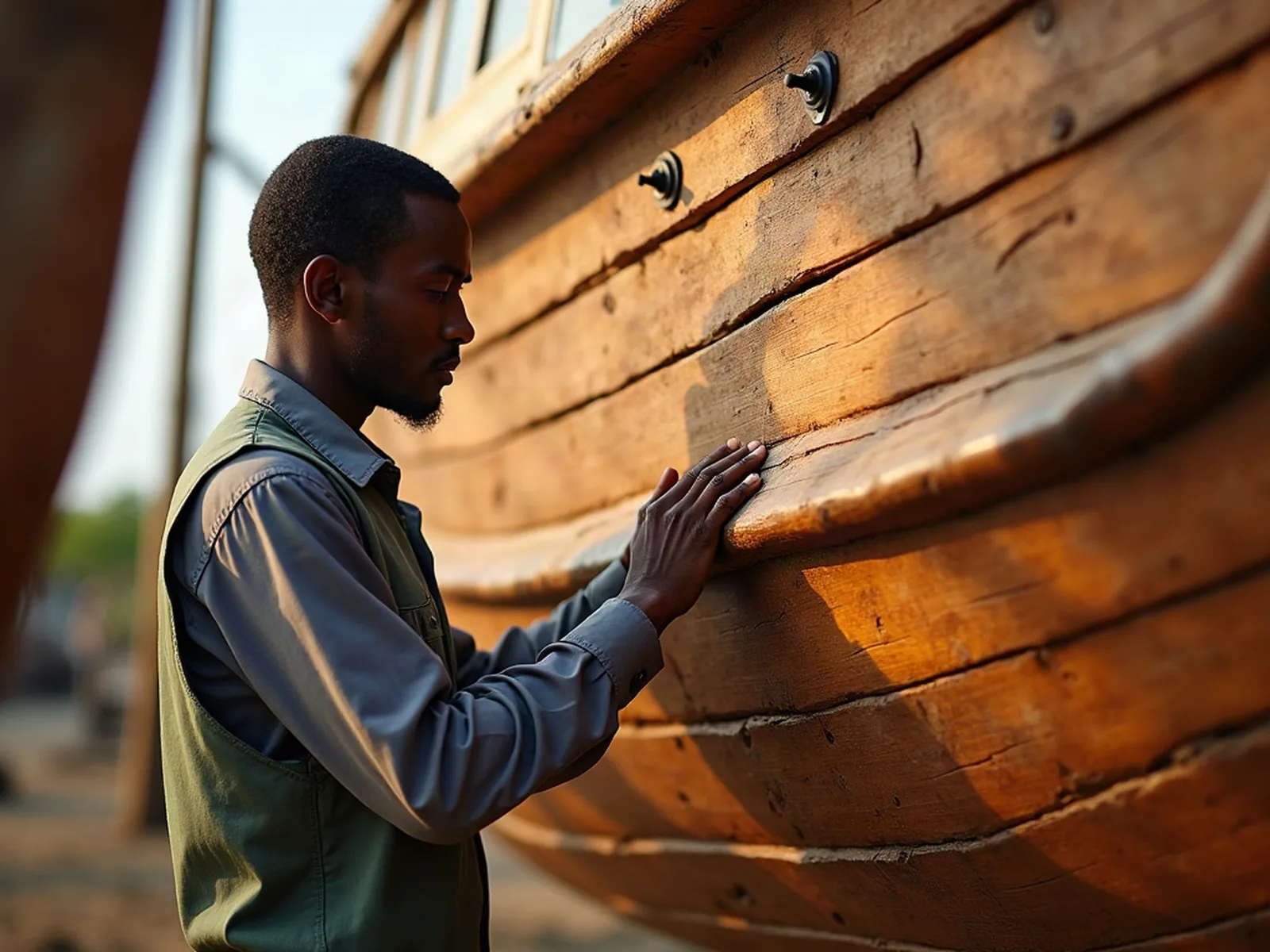
A phinisi survey is a physical examination, not an instrument survey. Timber fails from the inside through fastening corrosion, seam movement and rot at trapped end grain, so the method is pick testing, sample fastening withdrawal, seam probing and moisture profiling — always with the vessel hauled out.
Indonesia builds more large wooden vessels than anywhere in the world, mostly along the Bulukumba coast of South Sulawesi, mostly without drawings and mostly outside class. Many are superb. Some are not. Nothing about the difference is visible from the dock.
The five failure modes
| Failure | Where it starts | How it is found |
|---|---|---|
| Fastening sickness | Iron or galvanised fastenings corroding inside the timber | Sample withdrawal, black staining around fastening heads, weeping at plank lands |
| Rot at trapped end grain | Frame heads, beam ends, bulkhead ends, under the sole | Pick test with a spike, moisture above 25 %, smell, hollow sound |
| Seam and caulking failure | Garboard and topsides where timber cycles wet and dry | Seam probing, evidence of repeated re-caulking, cotton or oakum condition |
| Marine borer | Below the waterline where antifouling has failed | Underwater inspection, spike testing, tapping for hollowness |
| Distortion / hogging | Long hulls, heavy later engine installations, poor lay-up support | String line along the sheer, plank land alignment, door and hatch fit |
Why the survey has to break the surface
You cannot assess a timber hull honestly without physical testing. Pick testing leaves marks. Withdrawing a fastening leaves a hole. The number and location of test points are agreed with the owner in writing before work starts, each one is photographed, and making good is agreed as part of the scope. Any surveyor promising a complete wooden-hull assessment with no physical testing is offering a walkthrough.
What good construction looks like
- Ironwood (ulin) or comparable durable timber in the structural members, not just in the visible ones.
- Fastenings appropriate to the timber and consistently sized, not a mixture of whatever was available.
- Frames closely and evenly spaced, with sound joints at the futtocks.
- Engine beds tied properly into the structure rather than bolted to whatever was underneath.
- Seams consistent in width with caulking properly driven and payed.
- Evidence of maintenance discipline: recent re-caulking done well, anodes present and working, antifouling intact.
Age is not the question
A well-built ironwood hull, re-fastened and re-caulked as needed and kept working, runs for decades. A poorly built hull left idle in a fresh-water-fed estuary can be structurally finished in ten years. Fresh water accelerates rot; continuous use and dry-season hauling slow it. The survey establishes which vessel you are looking at, and the build year tells you almost nothing.
Frequently asked questions
Is a phinisi survey different from a yacht survey?
Substantially. Timber is assessed by physical testing rather than instruments, the vessel must be hauled out, and construction is traditional rather than to a drawing — so craft quality and repair history matter as much as measurable condition.
Where can a phinisi be hauled out?
Beach slipways at Tana Beru, Ara and Bira in South Sulawesi, and yard facilities in Bali and Labuan Bajo. Slipway availability drives the survey schedule, not the other way round.
Can a wooden hull be valued?
Yes, usually on a depreciated replacement cost basis because comparable sales evidence is thin. The method is stated in the report.